Play & Learning
Risky Play: Safe Equipment Benefits for Kids
Liliya Taneva5 min read
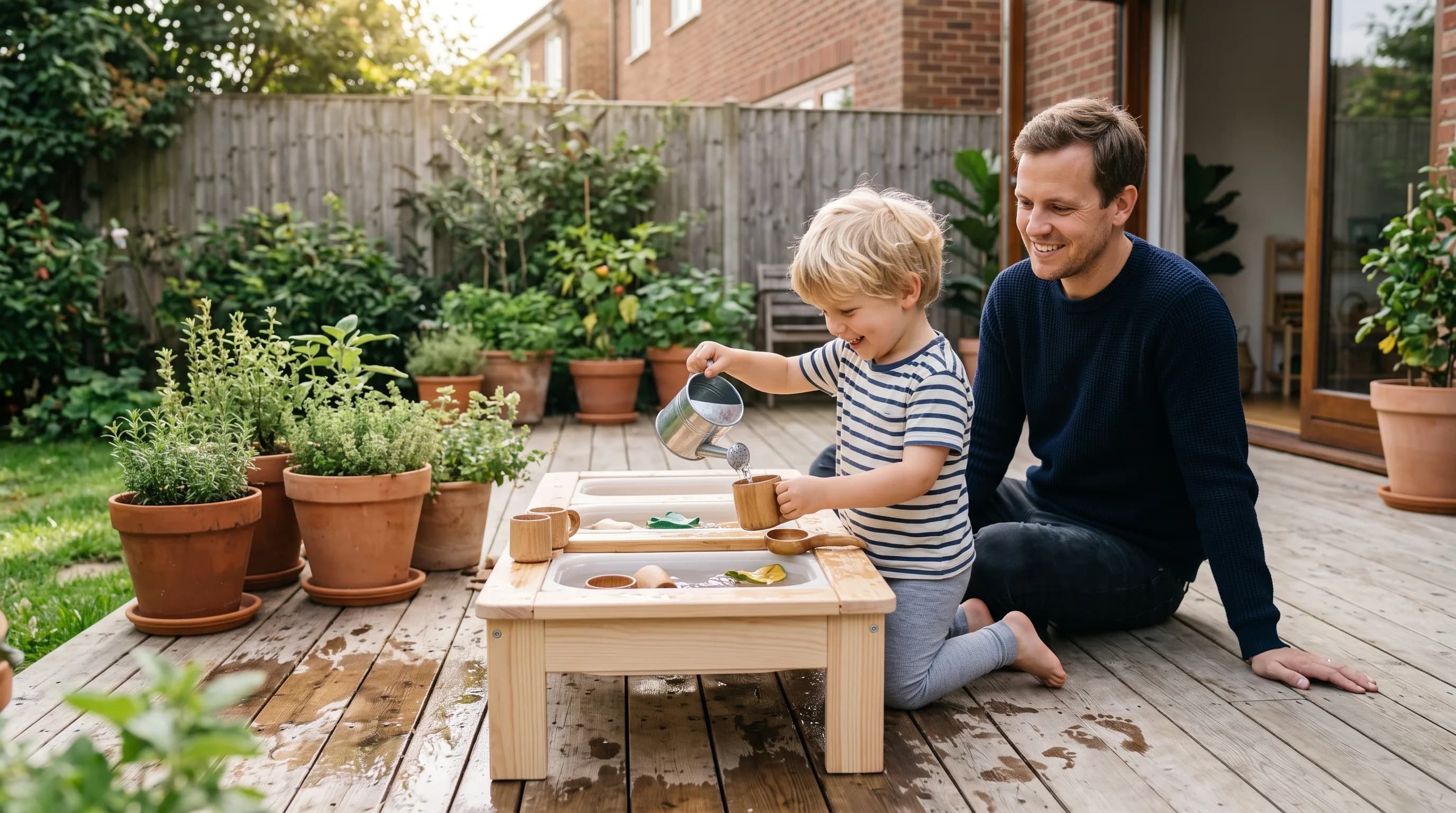
Discover how risky play with safe equipment can enhance children's development and boost their confidence.
As parents, we often worry about our children's safety and try to protect them from harm. However, research has shown that engaging in risky play can actually be beneficial for children's development. So, what exactly is a risky play, and why is it important?
Parents interested in enhancing their child's play experience can explore our physical play guide for more ideas.
Risky play is a play that involves a degree of risk of physical injury or danger. It can include activities such as climbing, jumping, and exploring and allows children to challenge themselves and push their limits. While it may sound scary, risky play is actually a natural and necessary part of children's development.
So, why is risky play beneficial for children? Firstly, it helps children to develop their physical skills and coordination. By taking risks and exploring their environment, children learn to navigate obstacles, balance, and coordinate their movements. This helps them to develop their gross motor skills, which are essential for activities such as running, jumping, and playing sports.
Risky play also helps children to develop their emotional resilience and confidence. By taking risks and learning to manage their own safety, children develop a sense of mastery and control over their environment. This can help to build their self-esteem and confidence and make them more resilient in the face of challenges.
Finally, risky play is also beneficial for children's cognitive development. By exploring and taking risks, children learn to problem-solve and think creatively. They develop their spatial awareness and learn to assess risk, which is an important life skill.
So, how can parents support risky play at home? Firstly, it's important to provide a safe and supportive environment for children to play in. This means ensuring that there are no obvious hazards or dangers and providing age-appropriate equipment and materials. It's also important to supervise children's play and provide guidance and support as needed.
Here are some ideas for risky play activities that you can try at home:
-
Climbing: Encourage your child to climb on age-appropriate equipment, such as a low climbing frame or jungle gym.
-
Exploring: Take your child on nature walks and encourage them to explore their environment, such as climbing over rocks and logs.
-
Water play: Allow your child to play with water and experiment with pouring, splashing, and mixing.
-
Balance activities: Set up balance beams or stepping stones and encourage your child to practise balancing and jumping.
For more on how play impacts development, check out our article on how different types of play positively impact child development.
In conclusion, while it may feel scary to allow our children to engage in risky play, it's actually an important part of their development. By providing a safe and supportive environment, we can encourage our children to take risks and explore their environment, building their physical, emotional, and cognitive skills in the process.
Montessori play activities can be integrated into risky play by using natural materials and open-ended toys.
Risky play involves activities where children face some physical risk. This can include climbing, jumping, and exploring. Such play allows children to challenge themselves and push their limits. Although it might sound scary, risky play is a natural and essential part of growing up.
Try these risky play activities at home:
- Climbing: Let your child climb on low, safe equipment like a jungle gym.
- Exploring: Go on nature walks and let your child climb over rocks and logs.
- Water play: Allow your child to play with water, pouring and splashing.
- Balance activities: Set up balance beams or stepping stones for jumping and balancing.
In conclusion, letting children engage in risky play can be daunting for parents. However, it is crucial for their development. By creating a safe environment, we help them explore and take risks. This builds their physical, emotional, and cognitive skills.
Risky play involves activities where children face some physical risk. This can include climbing, jumping, and exploring. Such play allows children to challenge themselves and push their limits. Although it might sound scary, risky play is a natural and essential part of growing up.
Risky play helps children develop physical skills and coordination. By taking risks, children learn to navigate obstacles and balance. This improves their gross motor skills, which are key for running and jumping. Risky play also builds emotional resilience and confidence. Children gain a sense of mastery by managing their safety. This boosts their self-esteem and makes them more resilient. Additionally, risky play enhances cognitive development. Children learn to problem-solve and think creatively. They develop spatial awareness and risk assessment skills, which are crucial for life.
Try these risky play activities at home:
- Climbing: Let your child climb on low, safe equipment like a jungle gym.
- Exploring: Go on nature walks and let your child climb over rocks and logs.
- Water play: Allow your child to play with water, pouring and splashing.
- Balance activities: Set up balance beams or stepping stones for jumping and balancing.
So, how can parents support risky play at home?
To support risky play, parents should create a safe environment. Remove hazards and provide age-appropriate equipment. Supervise play and offer guidance when needed. Encourage activities like climbing on low frames, exploring nature, and balancing on beams. Risky play benefits children by enhancing their physical, emotional, and cognitive development.
For parents seeking more ways to enhance their child's play experience, our article on playful learning offers great insights into merging fun with education.
Incorporating sensory play into your child's routine can also offer numerous benefits for their development.
Frequently Asked Questions
What are some Montessori play activities for toddlers?+
Montessori play activities for toddlers include sensory bins, stacking blocks, and simple puzzles that encourage exploration and learning.
Illustrations created with AI image tools from our own prompts, curated and edited by our team. How we make things
Tags
Join our weekly newsletter
Framework-grounded ideas for parents and educators, every Thursday.