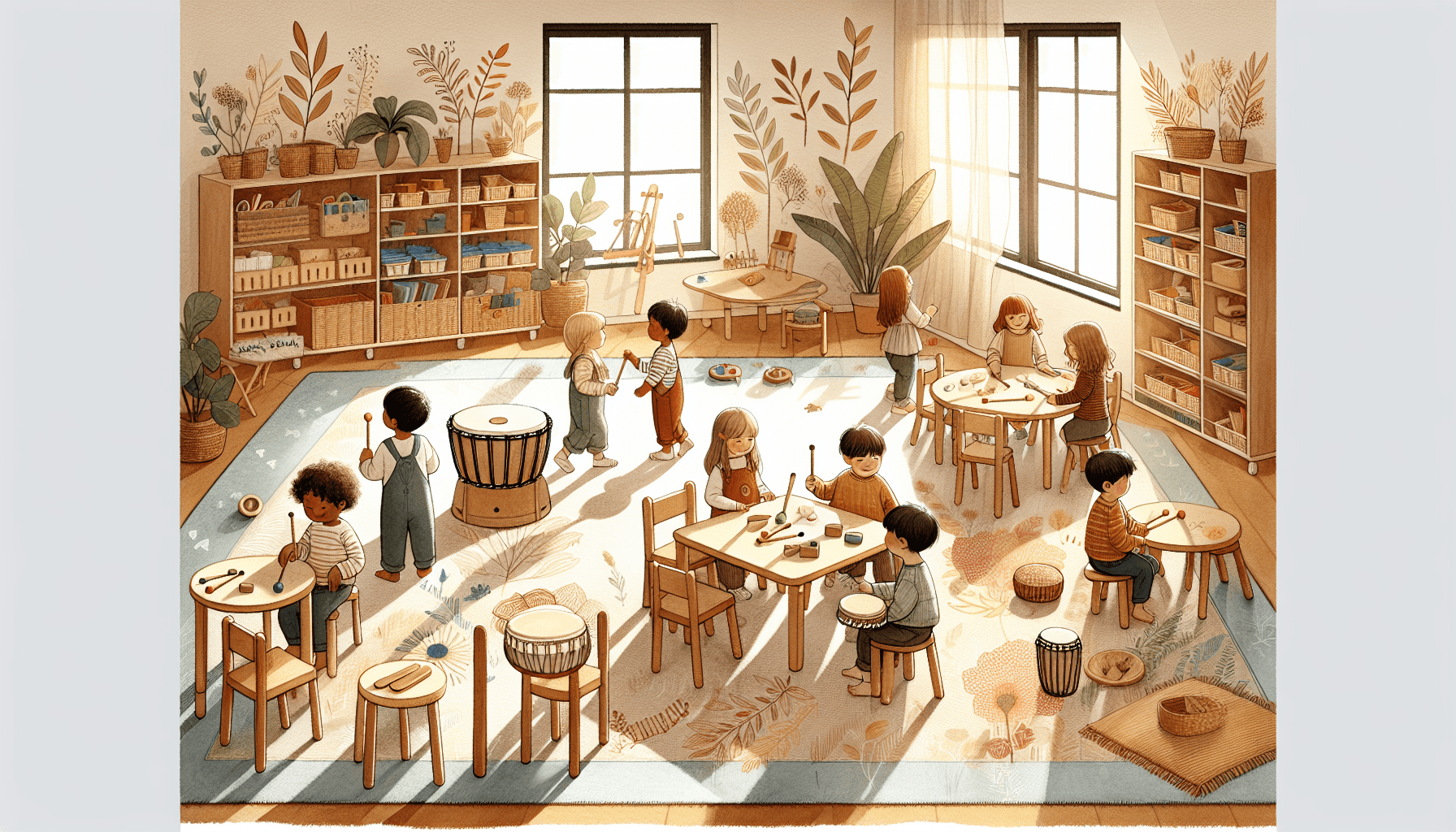
Discover how music and movement enhance children's rhythm and expression through engaging play activities that boost creativity and development.
Music and Movement is an exciting way to explore rhythm and expression through play. It is a great way to engage children in creative activities that promote physical, cognitive, and social development. Children can learn to express themselves, develop their coordination, and explore their creativity through music and movement. Music and movement activities can also help children to develop their language skills as they learn to recognize and respond to different rhythms and sounds. Music and movement activities can be adapted to suit any age group. They can help children learn about other cultures, explore their emotions, and develop physical skills.
Music and movement activities are essential for fostering children's growth in multiple areas.
How to Use Music and Movement to Enhance Early Childhood Development
Music and movement are great for early childhood development. They help children grow in many ways. Kids can improve their language skills by singing songs. They learn new words and ideas. Dancing to music helps them recognize patterns and sequences. Socially, these activities teach kids to interact with others. Playing instruments together shows them how to take turns and cooperate. Dancing in a group helps them follow directions and work as a team. Emotionally, music and movement let kids express feelings. Singing helps them share emotions in a safe way. Dancing allows them to express feelings through movement. Physically, these activities build motor skills. Playing instruments improves hand coordination. Dancing uses the whole body in a coordinated way. To enhance development, choose age-appropriate activities. Provide a safe and supportive space for exploration. Be patient and encouraging as children learn through music and movement.
Exploring the Benefits of Music and Movement for Children with Special Needs Music and movement can be powerful tools for children with special needs. Research has shown that engaging in music and movement activities can help children with special needs to develop their physical, cognitive, and social skills.
Music and movement are powerful tools for children with special needs. They help develop physical, cognitive, and social skills. Physically, these activities improve abilities like coordination, balance, and motor skills. They also boost strength and flexibility. Cognitively, singing and playing instruments enhance memory and concentration. They improve language and literacy skills too. Socially, music and movement build communication and teamwork. Playing in a band or joining a dance class boosts self-confidence and self-esteem. In conclusion, music and movement benefit children with special needs. They improve physical, cognitive, and social skills. Parents and caregivers should include these activities in daily routines.
Creative Ways to Incorporate Music and Movement into the Classroom
Music and movement engage students in the classroom. They help students focus, learn better, and enjoy lessons.
-
Introduce Topics with Music: Use music to start a new topic. Play a related song and discuss its lyrics. This helps students connect music with the topic.
-
Reinforce Concepts with Movement: Use movement to reinforce lessons. If learning about the solar system, have students move in a circle to represent planets orbiting the sun.
-
Enhance Learning with Music: Play calming music during activities like math problems. It helps students focus.
-
Stimulate Creativity with Movement: Encourage creativity by moving around while brainstorming or working on projects. It helps students think creatively.
-
Celebrate Success with Music: Play a song when students achieve a goal. It makes them proud and motivated.
Incorporating music and movement creates a fun and engaging learning environment. It helps students focus, learn effectively, and enjoy their time in class.
For more ideas on creating engaging learning environments, check out our Creating a classroom environment for 4-5 years old article.
Parents can also explore Sensory Activities for Preschoolers: Fun Ideas to Try for more engaging activities.
Music and movement activities are key in developing children's skills across various areas.
For more ways to engage children in learning, explore our Playful Learning: Merging Fun with Education article.
Parents can also learn about the benefits of sensory play in language development by visiting our Montessori Sensory Activities: Key Benefits article.
Conclusion
Music and movement are powerful tools for exploring rhythm and expression through play. They help children develop physical, cognitive, and social-emotional skills, as well as creativity and imagination. These activities can suit any age group and foster a sense of community and connection. Children learn to express themselves in a fun and meaningful way through music and movement.
Frequently Asked Questions
What are the benefits of music and movement for children?+
Music and movement activities enhance children's physical, cognitive, and social skills. They promote creativity, coordination, and emotional expression.
Tags
Share this article
Comments
No comments yet. Be the first to share your thoughts.
Leave a comment
Join our weekly newsletter
Framework-grounded ideas for parents and educators, every Thursday.